Rahmankul
Khan of the Kyrgyz · Hajji Rahmankul Kutlu
Last Khan of the Pamirs
1913 — 1990
«He who is destined to live will not die before his time.»
— Kyrgyz proverb
Chapter I
Rahmankul Khan
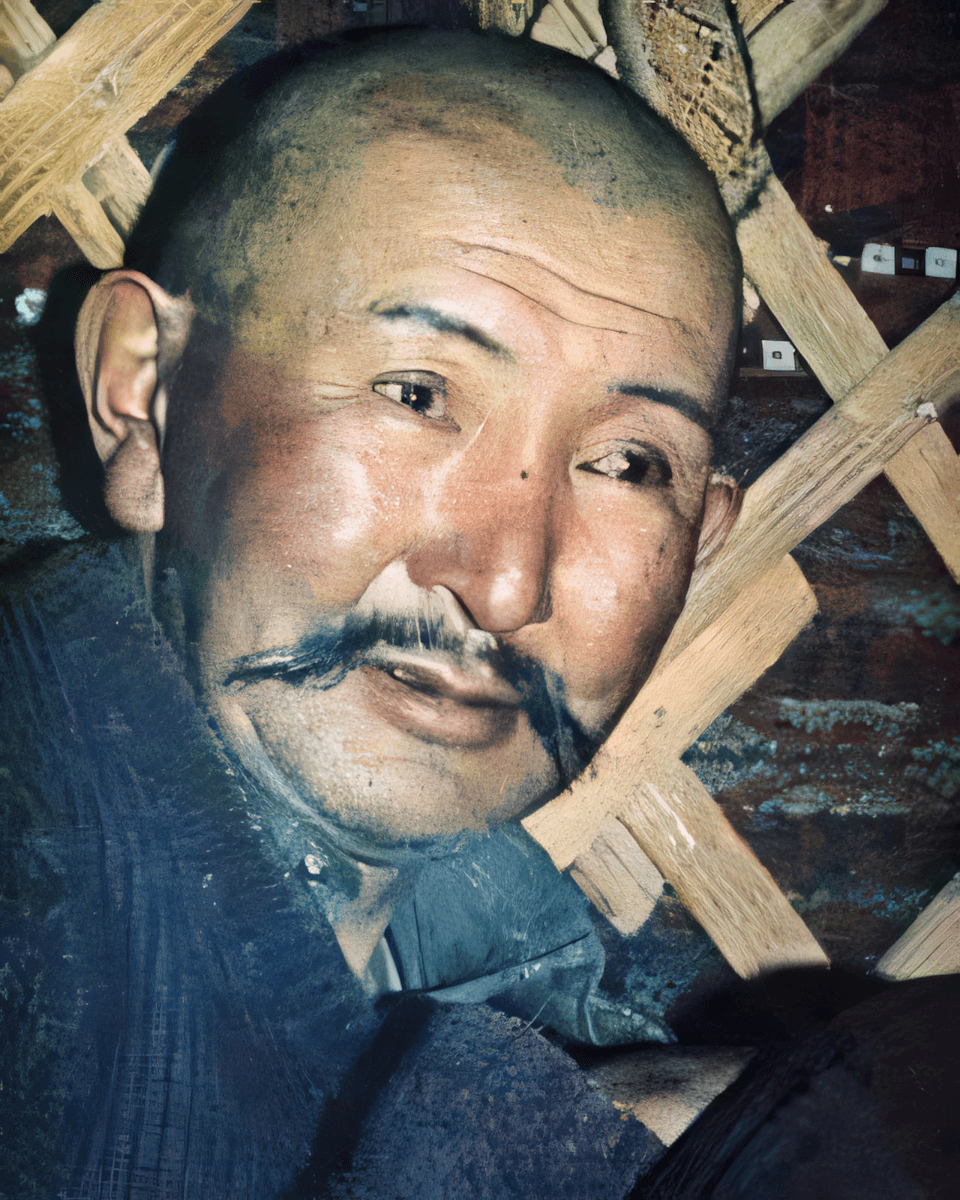
Rahmankul Khan was born in 1913 in the Tamchi Jer district of Nurgap. His father was Japarkul Haji, the renowned mingbashi of the Nurgap and Pamir region; his mother was Apiyda, the sister of Chong Temir, known for his struggles against the Russians in the Alai region. A member of the Sary Teyt tribe, Rahmankul Khan survived an assassination attempt by Soviet soldiers alongside his father when he was just 13 years old.
Following the death of his father in 1942, the Council of Elders elected him "Khan". This position was bestowed upon him not merely because of his noble lineage, but because of his humanity, wisdom, knowledge, and high moral qualities. He was officially recognized by the Afghan government and conferred the titles "Pâsbân-i Pamir" (Guardian of the Pamir) and "Karya-dar." From 1964 onward, he served as an official member of Loya Jirga, Afghanistan's parliament, defending his people's rights.
Rahmankul Khan was a wise leader who personally oversaw the education of his people. In a special yurt school he established in the Pamir, he personally taught children reading, writing, geography, mathematics, history, and religious studies, covering all the boarding and living expenses of these students from his own wealth. Fluent in Persian, Pashto, Russian, and Urdu, he was an intellectual with a sharp analytical mind who closely followed world politics. His love of art inspired his sons Malik and Akbar to become internationally recognized painter and sculptor.
In his approach to governance, he placed justice and consultation at the forefront, operating institutions such as the council of biys and the grand assembly to make all decisions with the participation of his people. He shared his vast wealth of tens of thousands of animals with his people, and never once sought compensation for animals that perished under the care of those to whom he had entrusted them for their livelihood.
To protect his people from the pressures of Soviet and Chinese communism, he led an epic freedom migration — first to Pakistan in 1978, then by aircraft to Turkey (Van, Ulupamir) in 1982. Rahmankul Khan, who passed away in Turkey on August 6, 1990, is remembered as the "last great Khan" who devoted his life to preserving the Kyrgyz language, faith, and national identity.
Chapter II
Migration Journey
The migration led by Rahmankul Khan stands as one of the most arduous freedom marches in modern history — a struggle for survival by a people fleeing ideological oppression and the threat of the "Red Terror."
«When together with the people — there is both a khan and a homeland.»
— Kyrgyz proverb
Chapter III
His Will
The Last Words of Rahmankul Khan
I am content with my people, who placed their destinies in my hands and obeyed me. As I depart for the next world, I wished I could carry away every burden on their backs, so that they might live a life of ease in this world.
We are Kyrgyz. Wherever we live — in Afghanistan, China, Pakistan, or Turkey — this will always be so. I came here so that no one who calls themselves a child of the Kyrgyz would lose their language, faith, or identity, and so that they might live in freedom.
Never let it slip from your minds that you are Kyrgyz. Almighty God bestows sustenance and blessing upon those who preserve their own language and identity. The future of the Kyrgyz is bright!
The Kyrgyz are a people who hold their homeland dear. Do not forget that Kyrgyzstan is your ancestral homeland. But if you say you will never return there, that is your decision. You may also find it hard to adapt to the changes that have taken place. For some of you were born in the Pamir, and others were born in Van. You may go to settle on the lands of Kyrgyzstan, holding your ancestral homeland dear. But if fate has written that you are to live in Ulupamir, be grateful for that too.
Is there any place in the world where the sound of Kyrgyz horses' hooves has not been heard? Wherever they may be, one must know and never forget that the Kyrgyz have preserved their lineage, language, and identity for centuries — that they have never been lost among other nations. I always pray to Almighty God for the unity and solidarity of the Kyrgyz, and that their state may be "blessed."
Rahmankul Khan
1913 – 1990 · Last Khan of the Pamir